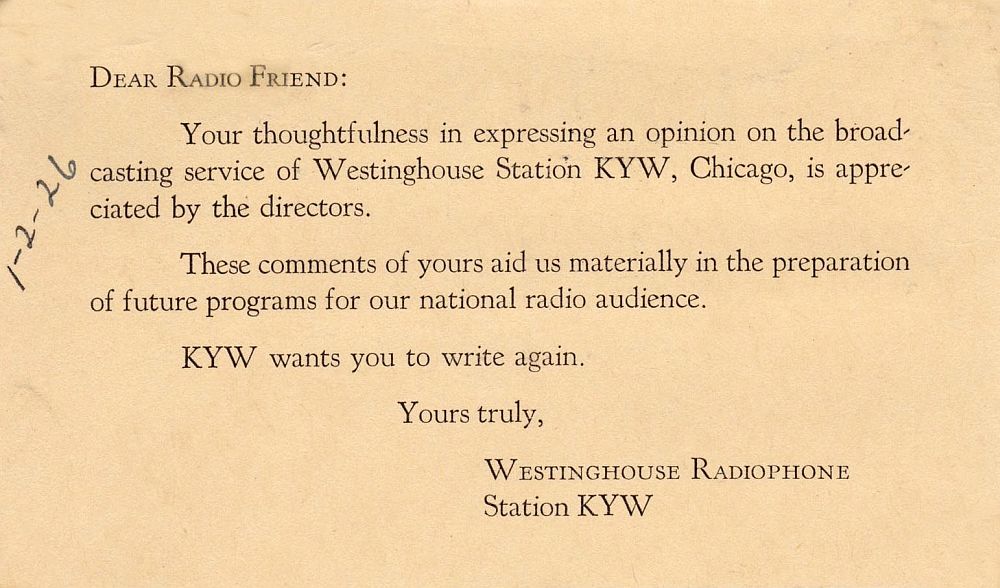
KYW – America’s Vagabond Radio Station
by John F. Schneider W9FGH
©2026
|
|
KYW – America’s Vagabond Radio Station by John F. Schneider W9FGH |
|
www.theradiohistorian.org Copyright 2026 - John F. Schneider & Associates, LLC (Click on photos to enlarge)
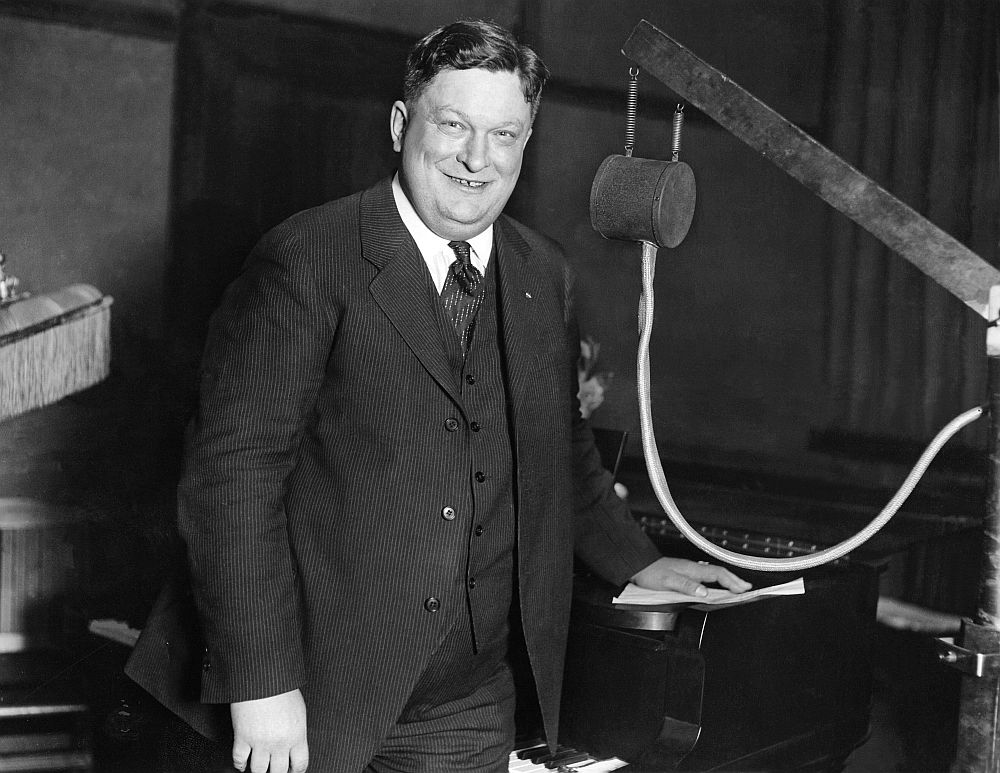
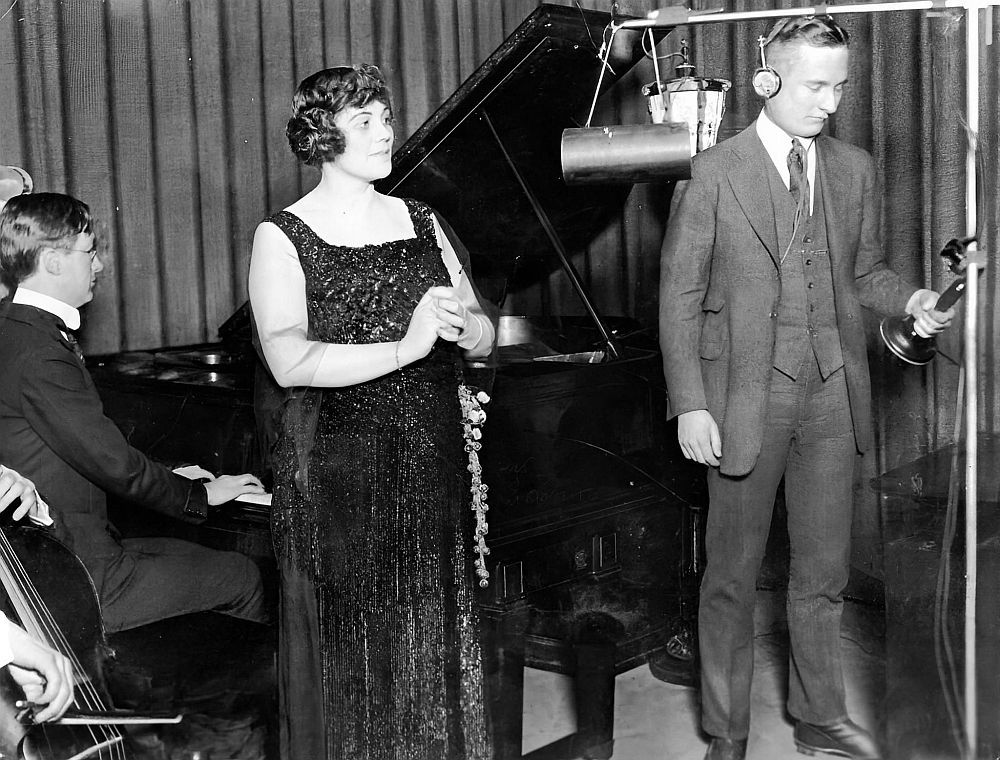
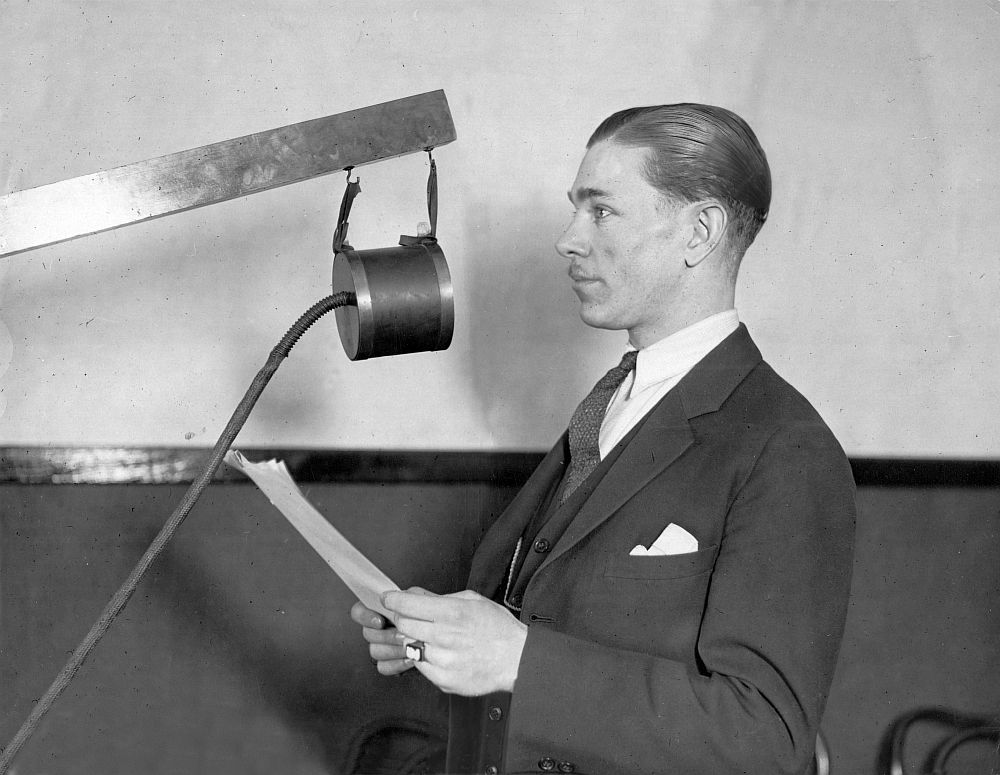 Ralph Crowder was the announcer for KYW’s “World Crier” newscast program in the 1920’s. Here he is shown speaking into one of the Westinghouse “tomato can” condenser microphones. (Author’s collection) 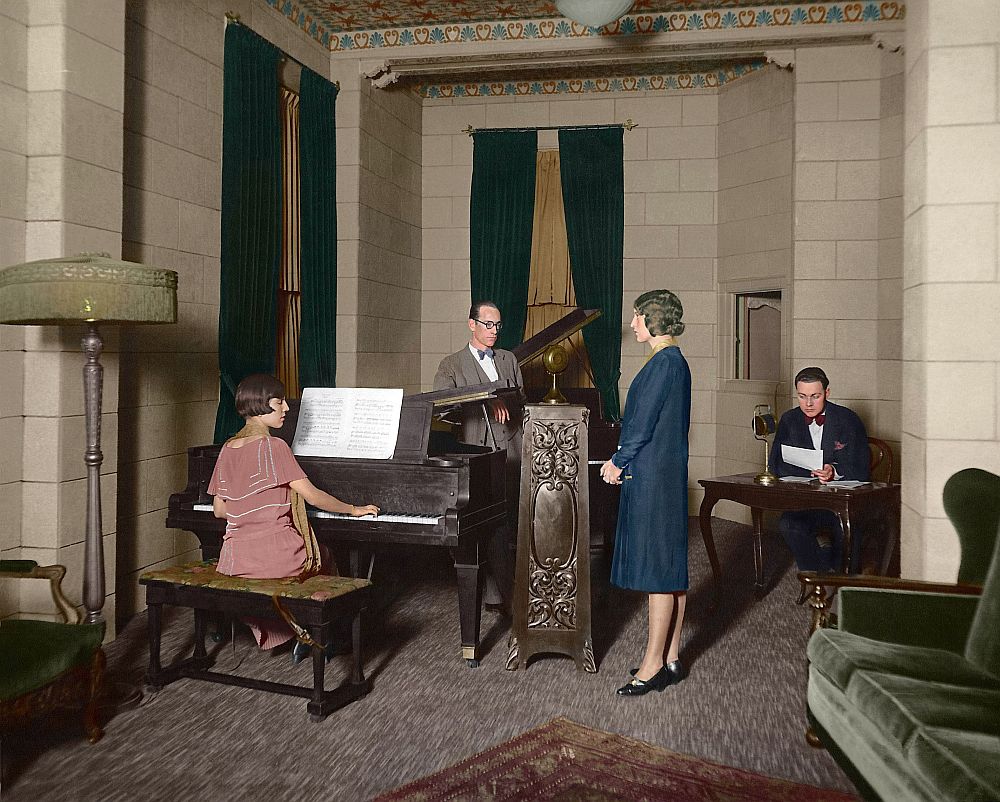 KYW broadcast from this comfortable studio in the Congress Hotel in Chicago, 1924. Shown are Eulalie Kober Stade, pianist; Edwin Boroff, studio director; Florence Pauley, soprano; and Harold H. Isbell, announcer. (Author’s collection; colorized by author)
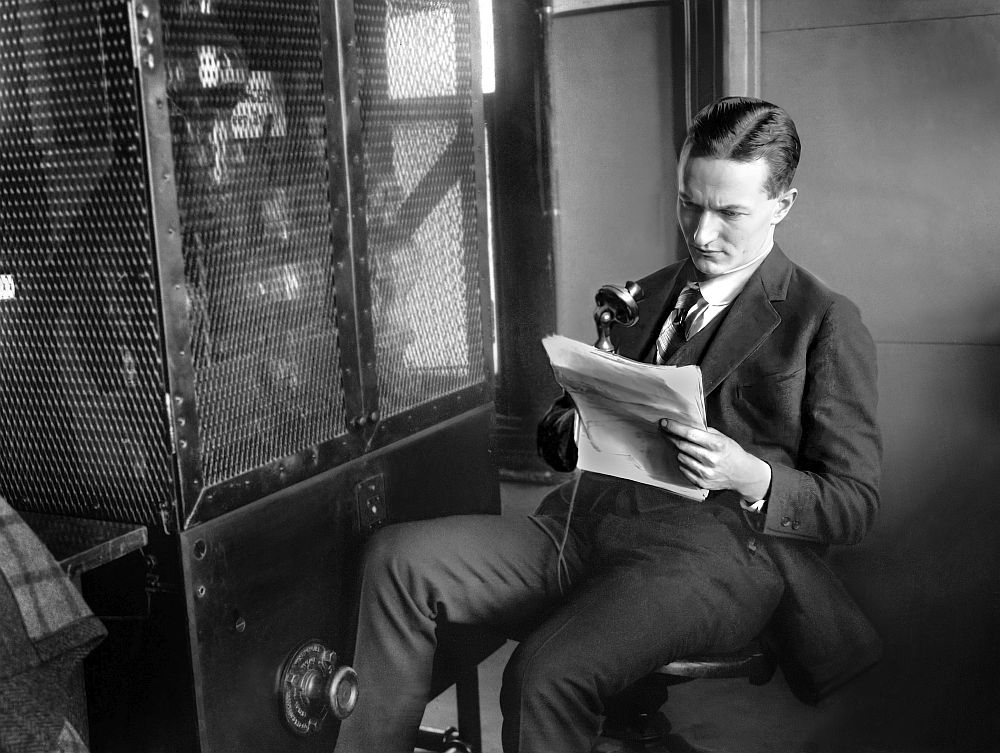
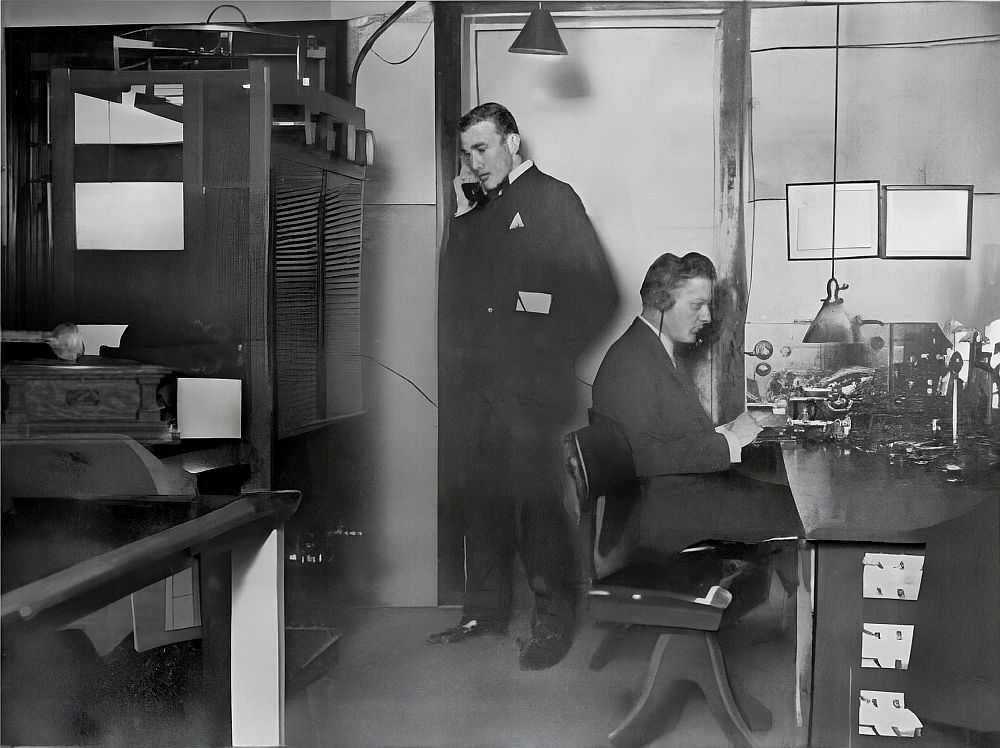
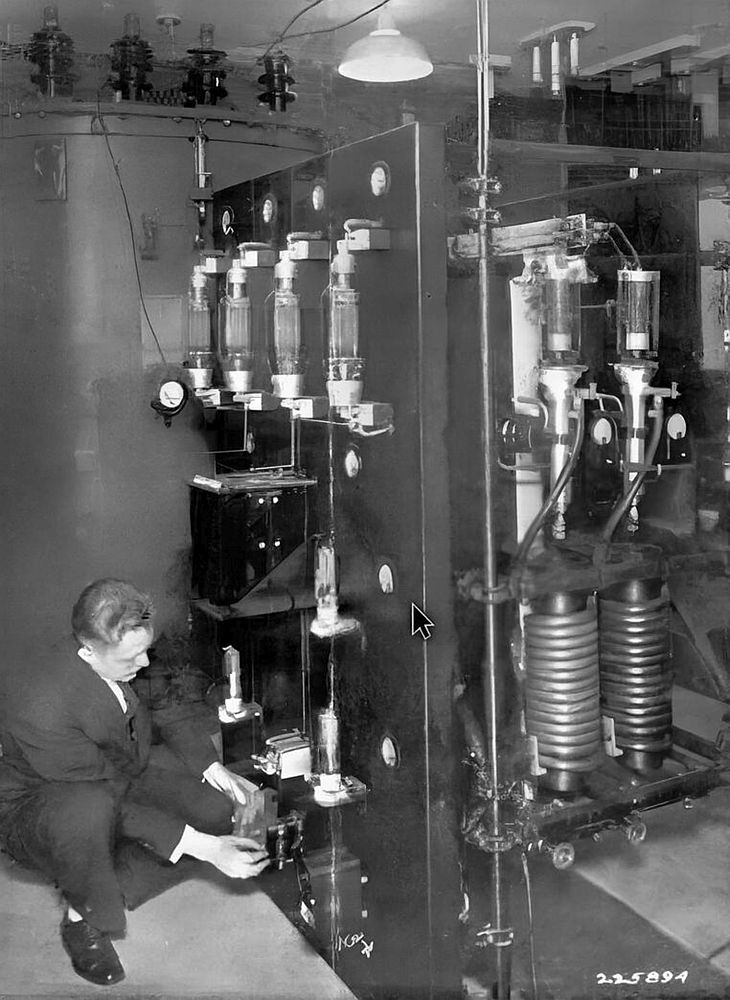
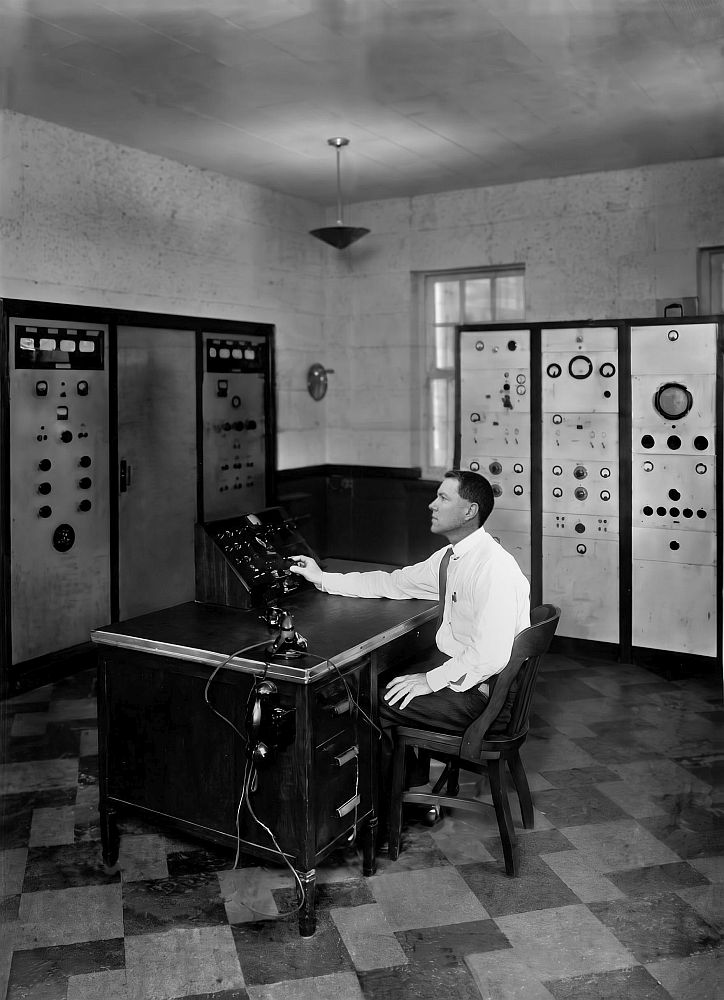 This was KYW’s transmitter control desk in
Philadelphia. “Commercial Radio”
Magazine, June 1935.
|
|
In the fall of 1921, Samuel Insull
heard the news that the Westinghouse Electric and Manufacturing Company had
opened radio broadcasting stations in Pittsburgh, Boston and Newark. Insull was the head of Commonwealth Edison
Co. in Chicago, and a major financial supporter of the Chicago Civic
Opera. He contacted Westinghouse and asked
them to build a station that would broadcast the Opera Company performances to
Chicagoland audiences. They came to an
agreement. And so, KYW, Chicago’s first radio
broadcast station, went on the air at 4:30 PM on November 11, 1921,
transmitting live from the stage of the Chicago Civic Auditorium. Mary Garden, the famed opera star and General
Director of the Chicago Opera Company, promised that the new station would
provide many hours of free highbrow entertainment to the local audience KYW’s first transmitter was a 500-watt rig installed on the
roof of the Commonwealth Edison Building, with studios on the 16th
floor. The flat-top antenna was
suspended between two 50-foot poles on the roof. Most nights, an entire opera
performance would be broadcast live from the auditorium stage. This was supplemented with popular
entertainers when there were no local operatic performances. A children’s bedtime stories program hosted
by Walter Wilson, aka “Uncle Bob”, was
another popular feature. In December,
1922, a newscast feature called the "World Crier" was begun and it continued
until 1927. News bulletins and market
reports were read over the air on the hour and half-hour, with reports being
delivered by messenger from local newspapers and the Chicago Board of Trade. The public response to the new
station was encouraging -- In less than a year, the number of radio receivers
in the Chicago area grew from 1,300 to over 20,000. KYW’s frequency assignments
changed as other stations joined the airwaves. Broadcasts began on the nationally-assigned
frequency of 360 meters (833 kHz). In
1923, KYW operated on 870 kHz., moving to 560 kHz in 1924. Its transmitter power of 1,500 watts was
considered high power for the time. In
June, 1924, KYW was reassigned to 1020 kHz, but the station could not be heard
in many parts of the city so it returned to the lower part of the band at 570
kHz. In the evening, KYW’s signal could be clearly
heard throughout the Midwest. In 1925,
KYW moved to the Congress Hotel, and a high-powered 20 kW transmitter, specially
built by the Westinghouse engineers in Schenectady, was installed on the roof. It used rectifier tubes for its DC high
voltage instead of motor-generators, and it was one of the first to use
water-cooled tubes. KYW affiliated with the NBC Blue
Network when it was formed in 1927. In a November 11, 1928 frequency
reallocation, KYW was again assigned to 1020 kHz, and the same coverage
problems were experienced once again. A
temporary solution was the installation of a 500-watt synchronous booster
(KYWA) on the roof of the Edgewater Beach Hotel. The permanent solution was the construction
of a new transmitter site in Bloomingdale Township (Glendale Heights), which
went on the air on February 1, 1930 with 10 kW.
About this same time, new studios were established in the Strauss Building,
and the Chicago Herald-Examiner, William Randolph Hearst’s newspaper, took over
the responsibilities for KYW’s programming and sales. PHILADELPHIA CALLING In 1927, Congress created the Federal Radio Commission to
bring order to the chaotic broadcast band.
One of its responsibilities was to reapportion broadcast services
equally throughout the country.
Congress’ Davis Amendment had divided the country into five geographic
zones, and required an equal number of stations in each zone. On August 30, 1928, the FRC issued its
General Order number 40, which reorganized the entire broadcast band into 90
frequencies classified as either clear, regional or local channels. Chicago was a major headache for the FRC, as it by now had
over 30 broadcast stations. Several
stations saw their licenses revoked, but what was to be done with the most significant
ones? KYW’s 1020 kHz clear channel
frequency was now assigned to the East Coast (Zone 2). As a temporary solution, the commissioners
decided to “loan” KYW’s channel to the Midwest (Zone 4), but there was
continual pressure to reassign the channel to a station in the East. The FRC continually received applications from
East Coast stations to take over KYW’s frequency. (These included WCAU, WIP and WFAN in Philadelphia,
WJAS in Pittsburgh, WWJ in Detroit, and a brand new station in Detroit.) All the applications were denied, but
Westinghouse was ultimately forced to relocate KYW to the Eastern U.S. if it
wanted to keep its lucrative clear channel assignment. It chose Philadelphia, which had only one
major station (WCAU) plus a handful of small stations. In Philadelphia, an agreement was made with Dr. Leon Levy,
who was the General Manager and part owner of WCAU. It was agreed that WCAU personnel would
handle KYW’s program and sales operations, while Westinghouse would take care
of the technical operations. The KYW studios would be located in the WCAU building on
Chestnut Street. NBC purchased KYW’s Bloomingdale Township transmitter
facility for $60,000, and it became the new transmission plant for its 50 kW
station, WMAQ. (That site is still being
operated today by WSCR, the successor to WMAQ.) In Philadelphia, land was acquired for a new KYW transmitter
site in Whitemarsh Township, 16 miles northwest of the city center. A two-story Dutch Colonial building housed
the transmission equipment (still in use today). The new Westinghouse transmitter was the
first in the U.S. to operate entirely from AC power, without the use of
motor-generators. Two separate 4 kV
three-phase feeds were installed, with either one capable of operating the
entire station. The transmitter was
cable of 50 kW, although KYW only operated initially at 10 kW. Its open-frame construction was enclosed in a “room within a room”, arranged so that the opening of
a door to enter the room would operate interlocks that would shut down and
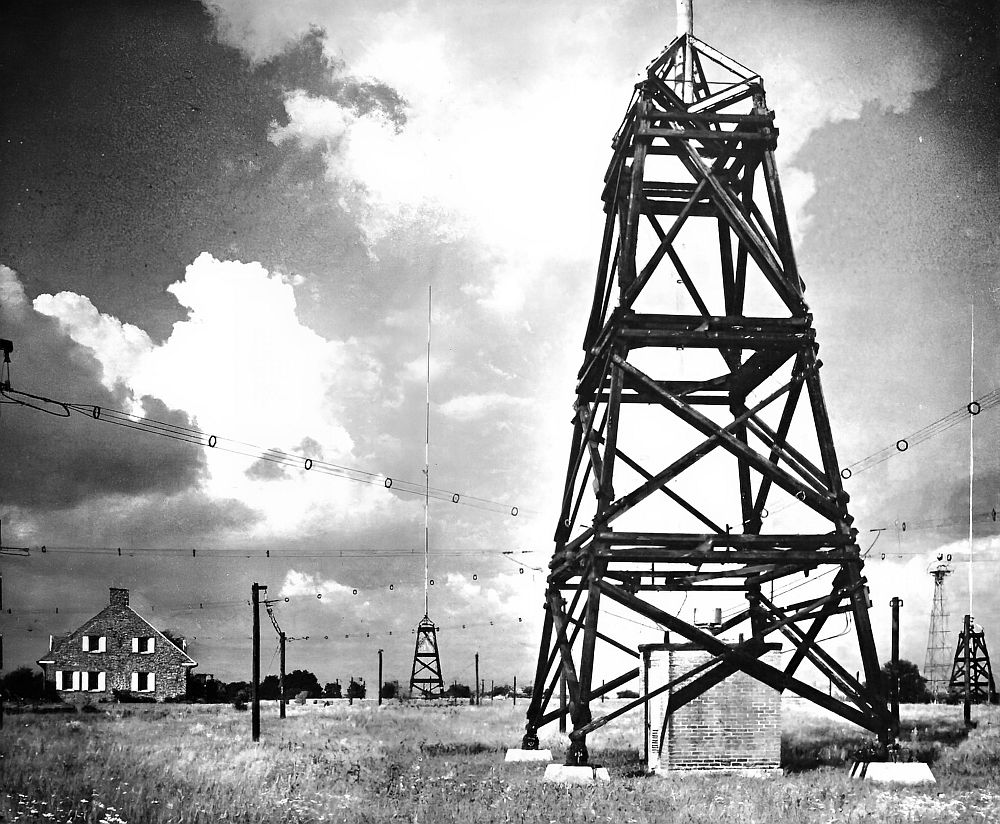
ground the transmitter. KYW’s Philadelphia antenna was
unlike anything else in the country. It
consisted of an array of four 200-foot steel poles mounted on 45-foot wood
lattice bases. They were arranged in a
rectangle configuration, 1/2 wavelength
by 1/3 wavelength, with the radiators on the long side being in phase; and
those on the short side out of phase.
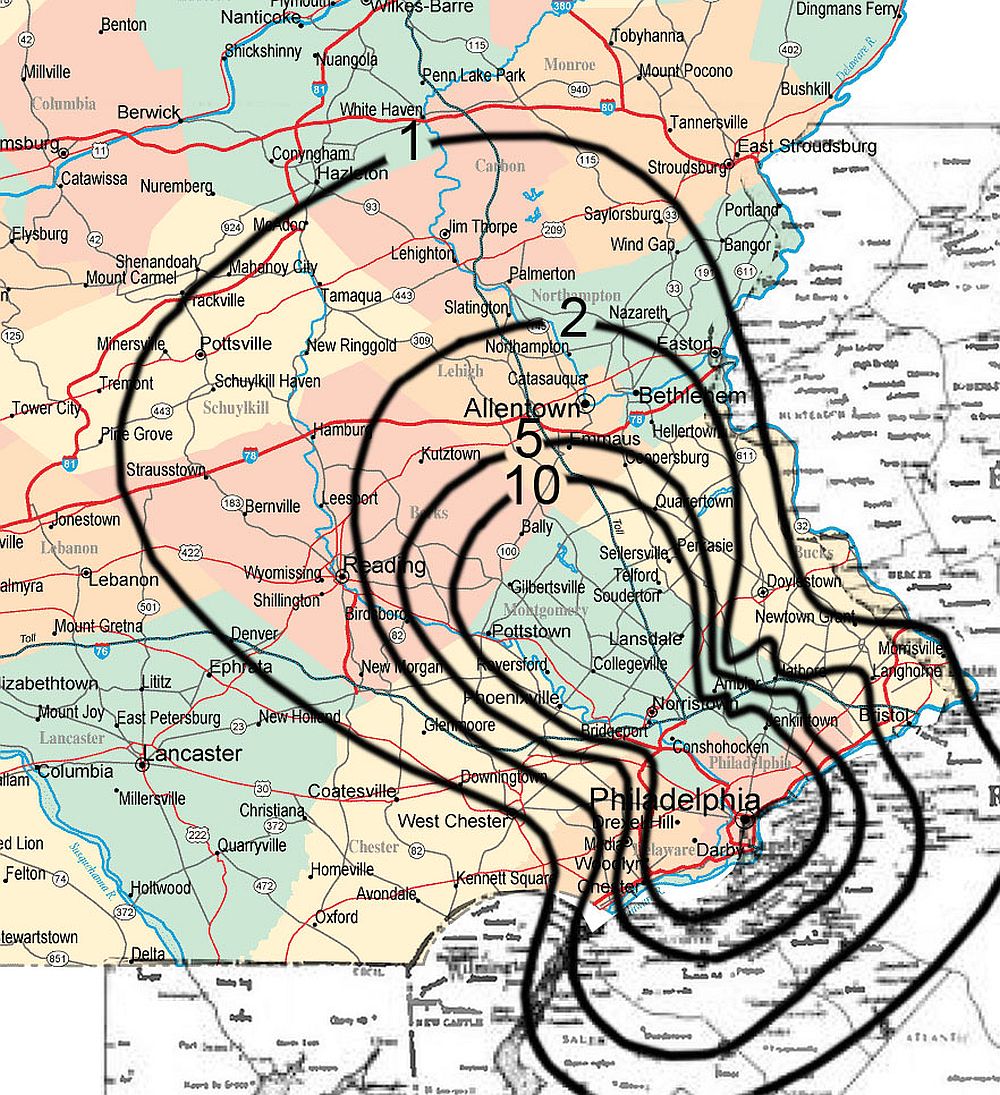
This early directional antenna created a figure-8 pattern oriented
NE/SW, with a null protecting WHN in New York at 1010 kHz. The use of four towers instead of two minimized
skywave interference to the ground wave. The ground system was a counterpoise of eight
caged wire conductors per tower, elevated ten feet off the ground, built with
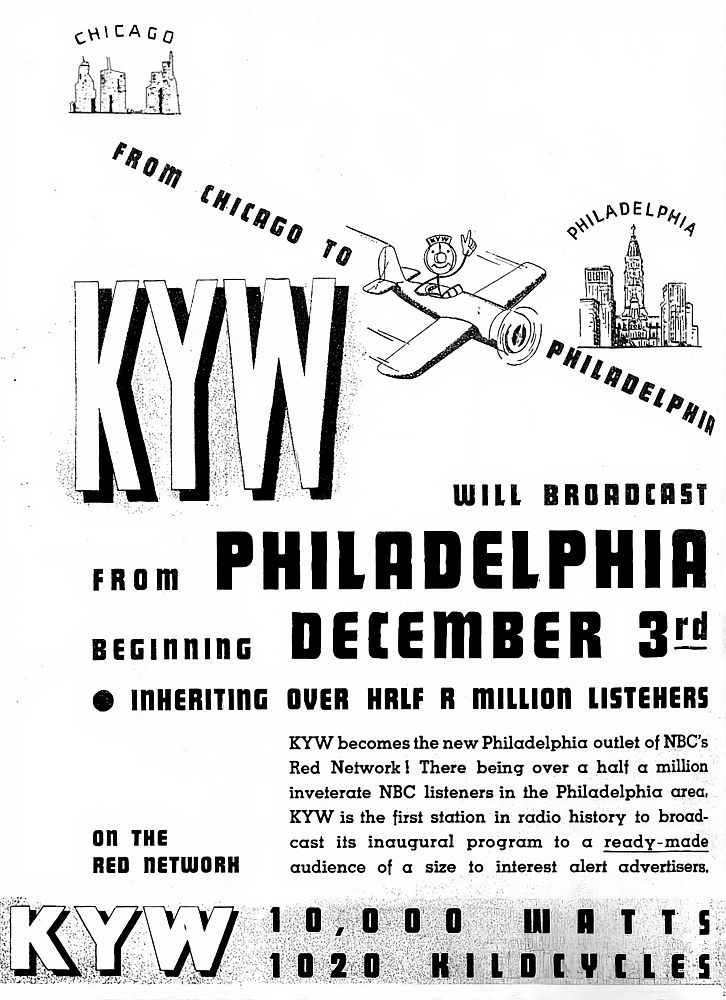
over 55,000 feet of copper wire. KYW’s move from Chicago to Philadelphia was seamless.
They signed off the air in Chicago on Sunday, December 2, 1934 and signed back
on in Philadelphia on Monday, December 3, 1934.
That evening, KYW broadcast a five-hour inaugural program featuring more
than fifty performers. A carrier pigeon
was released, carrying a message to NBC president Lennox Lohr in New York. Although KYW had been an NBC Blue Network
affiliate in Chicago, it switched to the Red Network in Philadelphia. It was soon apparent that the
operational relationship with WCAU was not going to be a smooth one. WCAU was CBS’s Philadelphia affiliate, and
Dr. Levy was a director on the CBS board.
(He was also the brother-in-law of CBS head Wm. S. Paley). This created a
conflict of interest in operating KYW, which was an NBC- affiliate. In June of 1936, Dr. Levy wrote to Lennox
Lohr: "I am frequently
confronted with the making of a choice of stations to which I am to give
business offered to me. While I have endeavored to be scrupulously honest in my
decisions, nevertheless each station has been deprived of proper guidance, for which
I am chiefly responsible." Dr. Levy added that both WCAU and KYW would “benefit
by separate managements, gaining an individuality from competition they cannot
now secure.” The result was that NBC took over
the management and sales of KYW under a lease arrangement in September, with
Westinghouse continuing to operate the technical facilities. On May 16, 1938, KYW’s studios
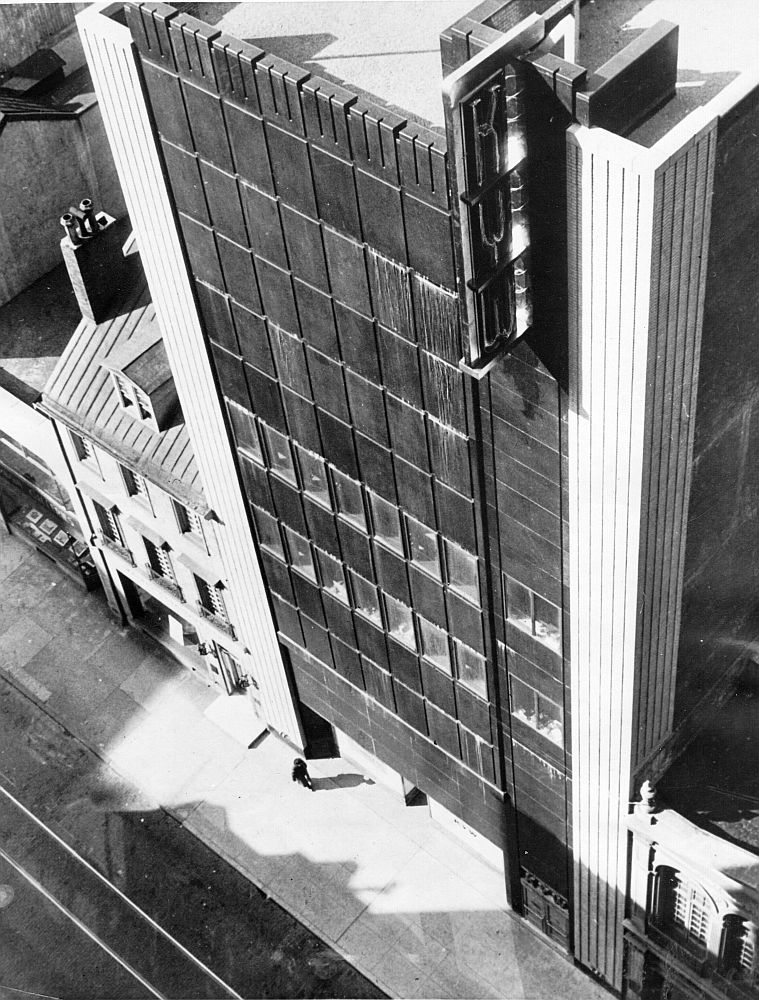
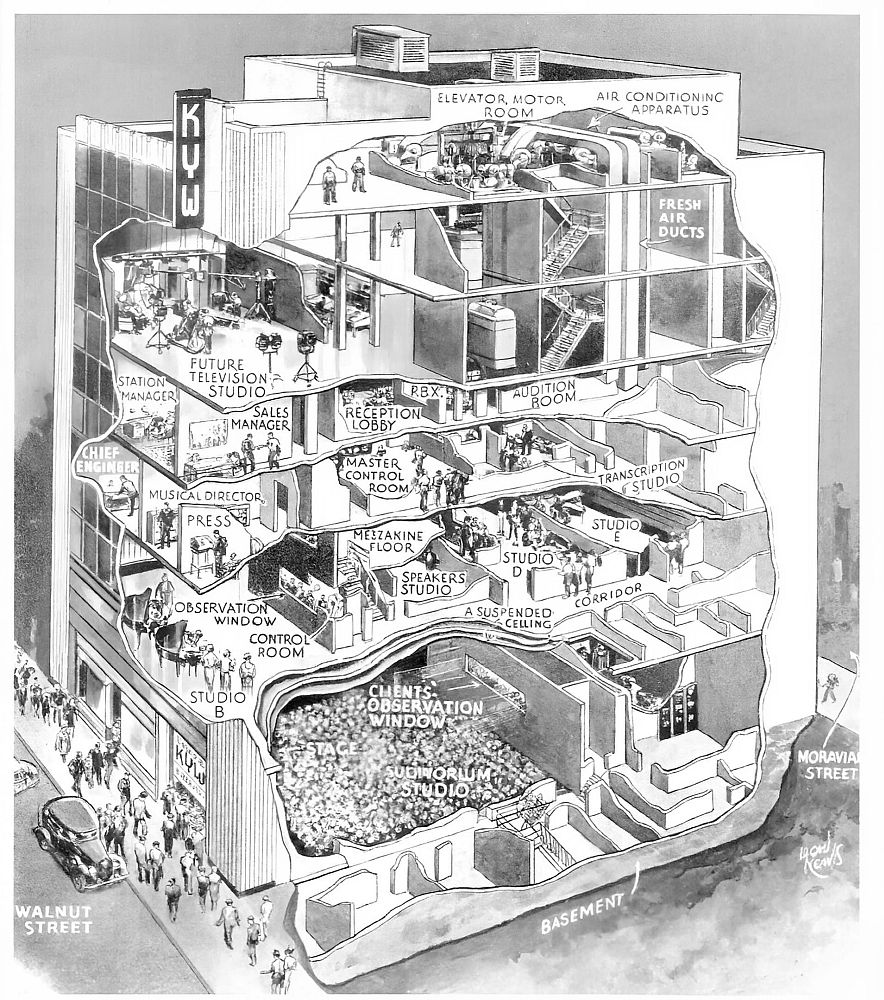
moved out of WCAU’s facilities and into a brand new KYW Building at 1619 Walnut
Street in central Philadelphia, built at a cost of $600,000 ($14 million
today). Architects Tilden and Pepper designed
a tall but narrow building that was only 51 feet wide by 114 feet deep. The
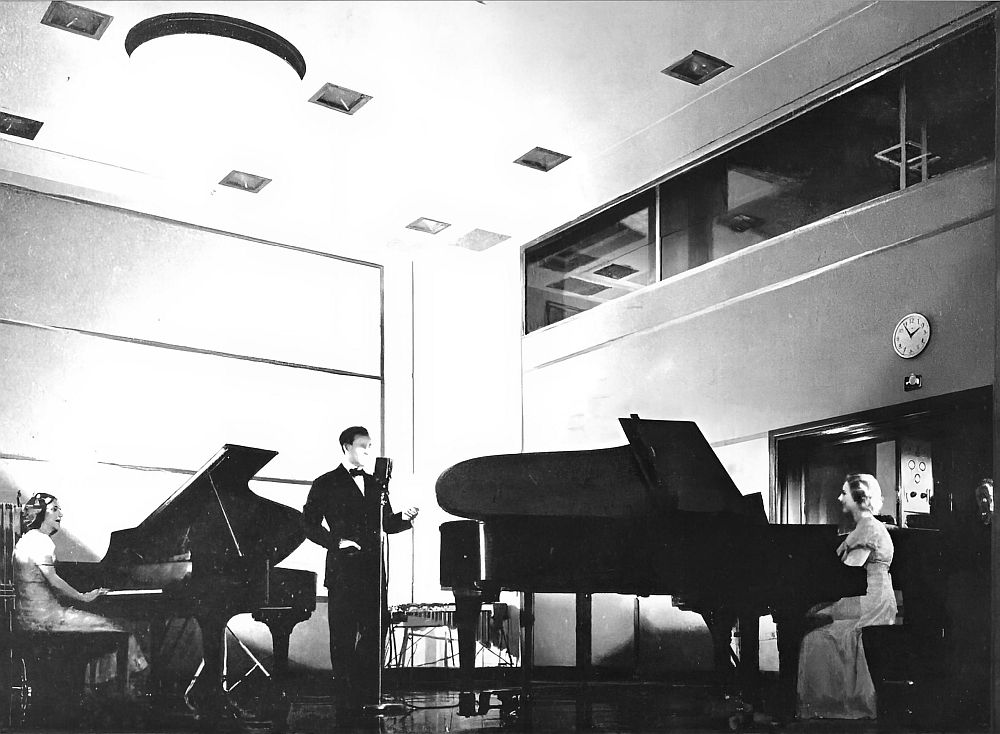
imposing seven-story façade was tiled with large black soapstone panels. Inside were six modern air-conditioned studios,
including a 225-seat auditorium in the basement (It would later become a TV
studio and was the home of the nationally-syndicated Mike Douglas TV show for
many years). By 1940, the lease agreement with
NBC was under pressure. NBC was now operating
15 stations around the country under similar lease agreements, while CBS leased
another 9 stations. The FCC decided that
such leases conflicted with its regulations requiring that station owners have
full control of their programming. So, in
July of 1940, Westinghouse took over the responsibility for programming and
sales of its four stations. By this
time, the KYW staff consisted of 119 persons plus a full time 16-piece orchestra. On January 16, 1941, KYW increased
its transmitter power from 10 kW to 50 kW, and on March 29, 1941, it moved from
1020 kHz to 1060 kHz as part of the nationwide NARBA AM band restructuring. The unique four-tower directional array was
replaced with two 450-foot steel towers in 1949. A TV station joined the radio operations in
1953 when Westinghouse purchased WPTZ Channel 3 from the Philco Corporation. ONWARD TO CLEVELAND: By the 1950’s, NBC had a strong
urge to acquire a TV station in Philadelphia.
It was then the country’s third largest market, and it included Camden,
NJ, just across the river and the home of the giant RCA Victor factory. However, there were only three television
licenses assigned to the city, and all of them were already taken. In 1955, NBC offered a “trade” to
Westinghouse. NBC proposed to take over
KYW and WPTZ – in exchange, Westinghouse would get WTAM AM/FM and WNBK-TV in
Cleveland, plus an additional $3 million as a “deal sweetener”. Westinghouse agreed. The deal went before the FCC,
where monopoly concerns were raised because the station swap would give NBC
ownership of TV stations in five of the country’s largest markets. The Commission’s staff recommended a hearing,
and the Department of Justice expressed anti-trust concerns. But RCA head David Sarnoff applied his
significant political influence, and finally the Commission voted 6-1 in
December to approve the swap without a hearing.
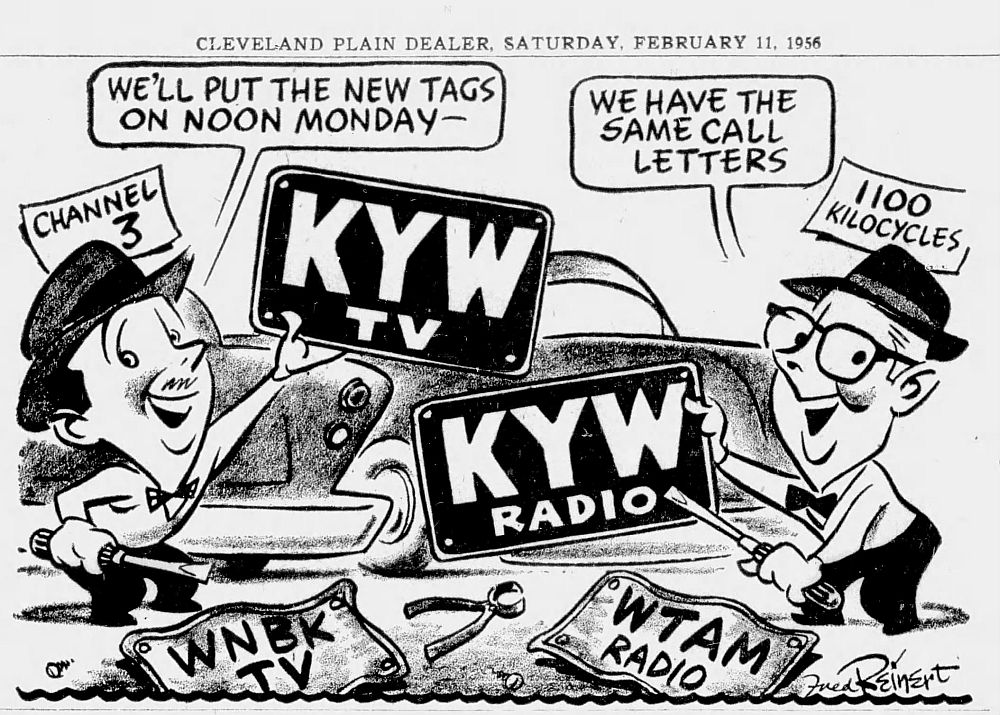
Commissioner Robert T. Bartley was the lone dissenter. In January, 1956, Westinghouse
moved into NBC’s building at 815
Superior Ave. in Cleveland and took over WTAM’s 1100 50 kW frequency. It retained its historic KYW call sign, and
so the Cleveland stations became KYW AM/FM/TV.
Their debut in Cleveland was celebrated with an 800-person banquet. Thousands of KYW balloons were released into
the air, each carrying certificates worth either $3 or $11. KYW was able to keep its NBC network
affiliation and retained many members of the WTAM and WNBK staff. In Philadelphia, NBC moved into
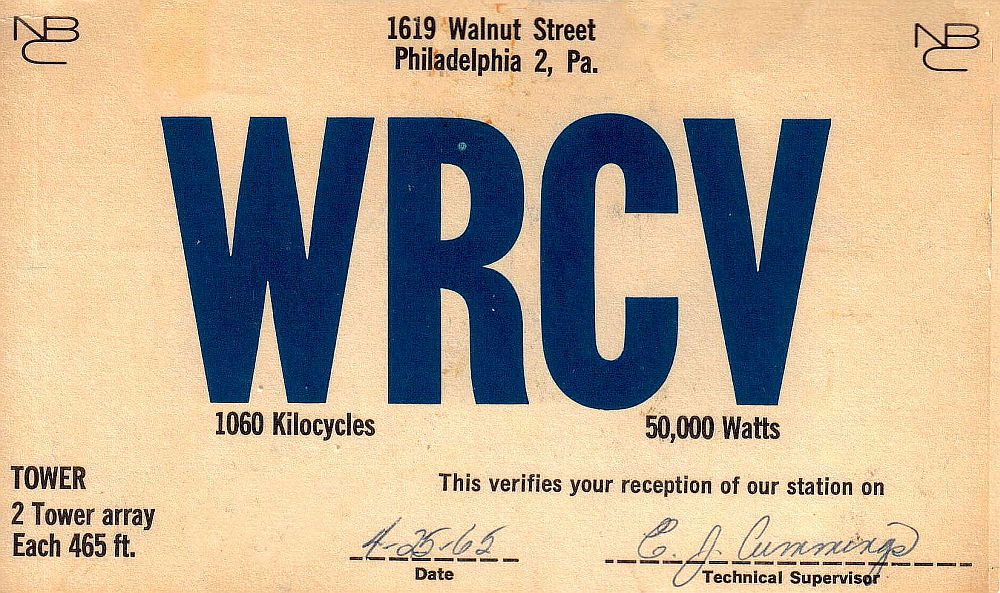
the KYW building. It chose the call sign
WRCV for its new AM and TV stations – a hat tip to “RCA Victor”. TROUBLE BREWING: But the ink was barely dry on the
station swap agreement before rumors began to circulate. Commissioner Bartley claimed that NBC had
threatened to cancel its NBC affiliations with all of Westinghouse’s TV and
radio stations if they didn’t agree to the deal. NBC denied the rumors, but the House of
Representatives’ anti-trust committee opened an investigation into the deal,
and the Justice Department began an inquiry into possible anti-trust
violations. The FCC reversed its
decision and opened a hearing. After much back-and-forth, the final
result was a 1959 consent decree in which NBC agreed to dispose of its
Philadelphia stations no later than the end of 1962. That deadline was postponed three
times as negotiations became increasingly complicated. NBC proposed to trade its WRCV stations with
RKO General in exchange for WNAC AM/TV and WRKO-FM in Boston. But the FCC refused to accept that solution,
arguing that NBC would be benefitting from its own “misconduct”. It claimed to have irrefutable evidence that
NBC had used “coercive and inequitable” tactics in its dealings with
Westinghouse. The only solution the FCC
would accept was to reverse the original swap and send KYW back to
Philadelphia. BACK TO PHILADELPHIA: In its ensuing 9 years in
Cleveland, Westinghouse had dropped its network programming and converted KYW to
a popular Top 40 hits station. When NBC took
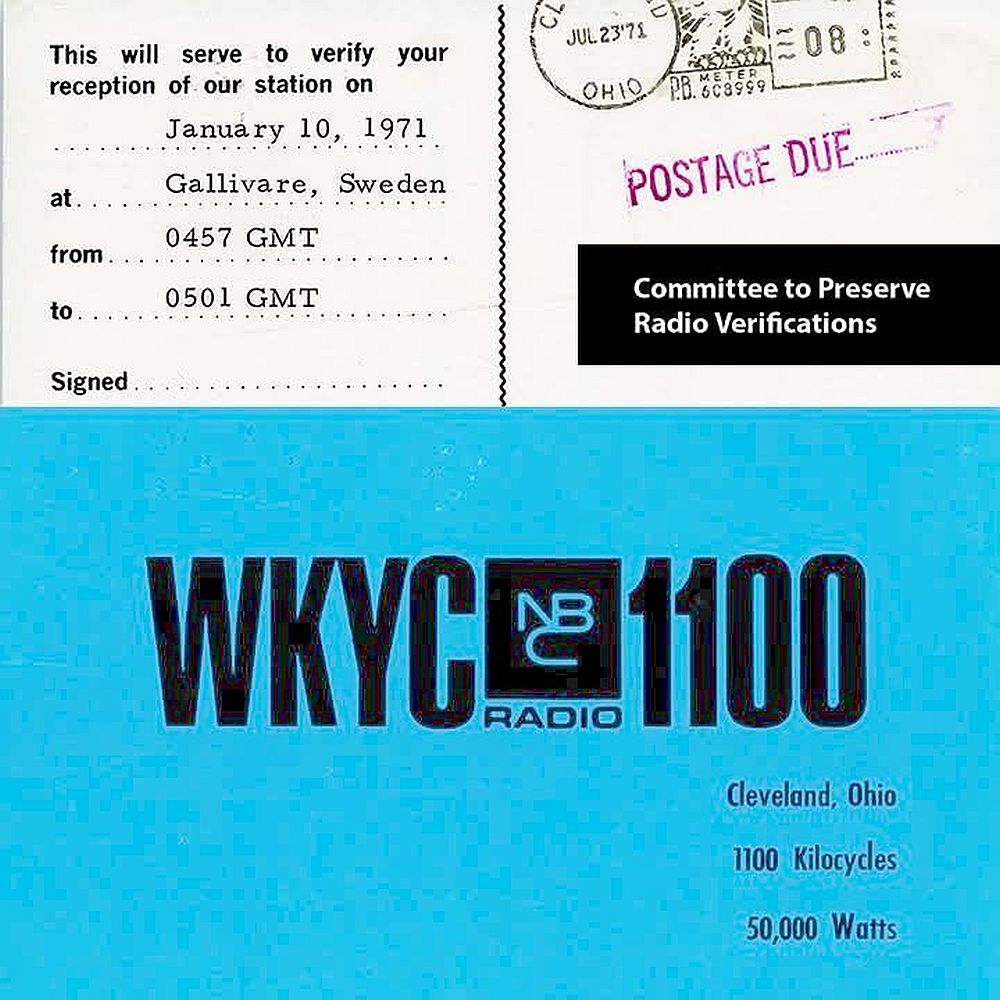
the station back on June 19, 1965, it adopted the call letters WKYC. Its WRCV management team moved to Cleveland,
but they kept the successful format and all of the KYW air personalities. (The one exception was Jim Runyon, who moved on
to WCFL in Chicago where his voice would be heard nationwide as the narrator of
the popular “Chickenman” series.) Westinghouse, now identifying its
stations with the “Group W” moniker, had made a daring move in April, 1965,
when it converted WINS in New York City to an innovative 24-hour all-news
format. Its instant success convinced
executives to try the same format in Philadelphia. On September 12. 1965, KYW made the switch to
all-news with the motto “All news, all the time”. It was a successful format that continues until
the present time. Today, KYW-AM continues to
broadcast from the same Whitemarsh Township property that it built in
1934. The original water-cooled
transmitter was replaced with a modern Continental 50 kW rig in 1968. The studios moved to 400 Market Street in
1972, and the Walnut Street building has since been renovated into commercial
and retail space with a modified façade.
In 1995, Westinghouse Broadcasting merged with CBS radio and adopted the
CBS name. Then in 2017,KYW and its
sister CBS radio stations were acquired by Entercom (now Audacy, Inc.). Its 50 kW signal on 1060 kHz can still be
heard across much of the Eastern USA at night, and its all-news program is
simulcast on 103.9 WPHI-FM and 94.1 WIP-FM-HD2. This article
originally appeared in the June, 2026 issue of the Spectrum Monitor Magazine
REFERENCES:
|